

From Quiet to Confident: Helping More Students Find Their Voice in the MFL Classroom
You cannot make someone do something.
You have to meet them where they are, connect with them, and invite them to where you would like them to be.
In many ways, this is what language teaching is all about.
Learning a language is one of the most vulnerable things a person can choose to do. We are asking young people to take risks publicly, to say things imperfectly, and sometimes to feel exposed in front of their peers. At a crucial time in life when teenagers are building their identity, we are asking them to be so vulnerable. Compared to other subjects, where they have built their expertise for years, they remain beginners in the language they are learning, no matter how long ago they started.

The Minimalist approach
Most of us don’t overcomplicate lessons on purpose. We add more because we care. When students look confused, we explain again. And again. We clarify, rephrase, add another example, another slide, another instruction. Before we know it, the room is full , filled with words, visuals, tasks, and well-meaning guidance. All that time, we think we are being supportive.
But what we often create instead is brain fog.

Mentoring in MFL
Mentoring in MFL is not about cloning yourself. It’s about helping someone else find their voice, their rhythm, their confidence while holding the space for them to grow.

Less tracking, more teaching.
We talk a lot about progress, evidence, and impact, but sometimes it feels like the paperwork around learning has become bigger than the learning itself.
Before every vocab test maybe we should stop and ask: “Who is the data really for?” “What purpose does it serve?” and “Does it add value to the learning experience?”

Aim for connections, not numbers.
Challenge the numbers-driven narrative
(“We’re told to raise GCSE uptake”)
Focusing only on numbers is like chasing shadows. What happens if you have massively raised the profile of the faculty, organised several trips, competitions, reviewed your SOW, increased parental engagement and in the end, no increase in students taking up GCSE or A-Level. Does that mean you have failed your appraisal target?

Stretch and Challenge
Are you stretching and challenging with care? Or are you keeping children busy in the classroom with extra exercises until you are ready to move on? 🔎

Confidence is a skill, build it one word at a time.
Confidence is not innate, it’s a skill. And in language learning, it’s built one word, one risk, one success at a time.
Make someone’s efforts feel seen and celebrated.
Make a big deal, use it to model your expectations and good practice, don’t take anything for granted.


The power of rest
Take a break, don’t fill your time with distractions and fillers every minute of your day! Give yourself permission to be still. Boredom is the birthplace of creativity!

Do less, with more impact.
Do less, with more impact.
Teach less, elicit more.
Not everything needs to be scripted and planned ahead.
Learn to disappear, go and stand/ sit at the back and observe from there.

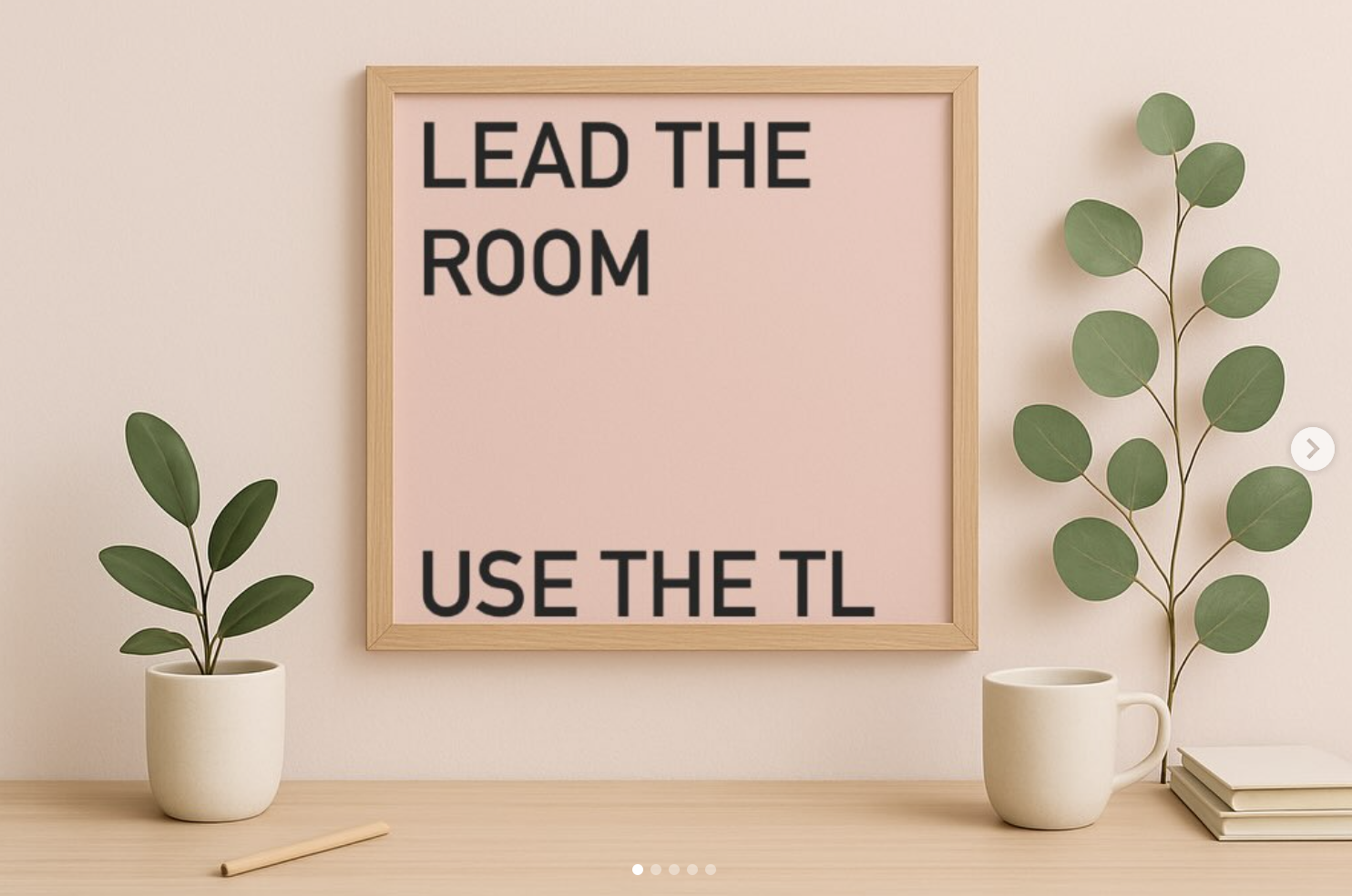
Lead the room, use the TL.
TL is something that can easily slip through the net, especially after a few years of teaching. It’s the one thing that can easily be forgotten.

Make space, hold silence.
When we make space for students to think, we make space for the learning to take place. We make space for them to think, reflect on what we just explained, summarise or rephrase in their head, categorise and rehearse their steps.

Modelling makes meaning visible.
Present with clarity, keep your instructions to a minimum and focus on modelling.

Teaching with clarity: Less noise, more meaning.
Teaching with clarity is removing any unnecessary instructions and talking throughout the lesson to make space for clarity of thoughts and actions.